Bumming It: The Gear
Get a breakdown of the gear I'm carrying and maybe even some inspiration for where to start in your own journey
The Bum
11/25/20255 min read
Welcome to the gear check for my cross country bike tour! If you're looking for some inspiration or bits of advice, you're in the right place. Of course, this is all about bumming it, so I'm no stickler on having the best gear or certain brands unless it's a matter of safety or important for your comfort. As you'll see, most of the gear I carry is on the cheaper end unless I have a specific purpose or preference in mind.
If you're looking to set off on your own journey, you don't need the best gear or certain brands, what's more important is making it happen. However, I will stress that you shouldn't cut corners in regard to safety or throw all comfort out the window. You need to keep in mind the specific conditions and risks with your upcoming trip and prepare accordingly. A large part of having a successful trip is your own psychology. You can have a terrible day struggling in the rain and cold, but you get to camp and listen to your favorite song on a nice pair of headphones or relax on a nice camp chair can make all the difference. Some items may be a hassle to carry or a bit heavier. If you're willing and able to carry the extra weight, then I'm all for those small creature comforts that keep morale up.
That being said, let's talk gear!
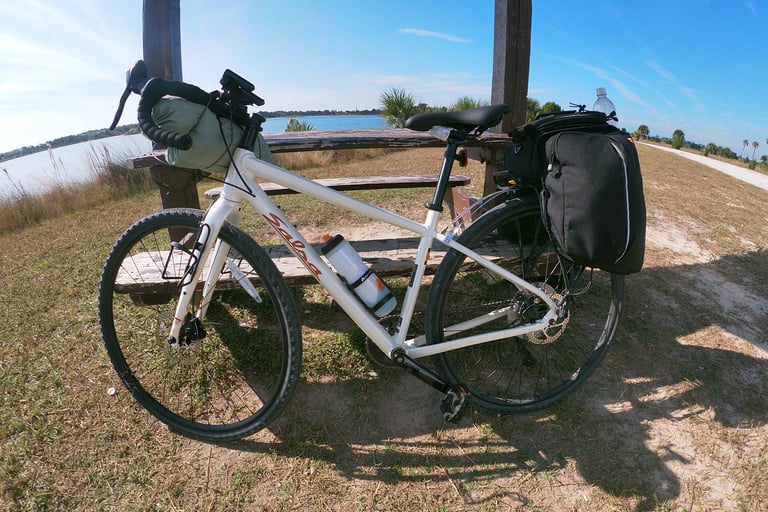
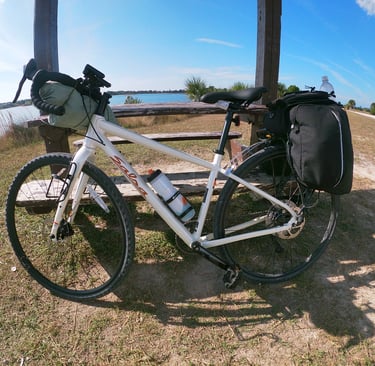
Perhaps my most important piece of gear, I spent considerably more money than I'm used to. Still, at 850 dollars, the Advent is on the budget end of gravel bicycles recommended for bike touring. However, my first bike tour from South Carolina to Wyoming was on a cheap mountain bike. I used bungee cords to strap dry bags on a rack over the back wheel and the front handle bars. Most bikes can be made to do the job if your willing to make it work. Yet, I chose the Advent for its many gear mounts, versatility and comfortable geometry. (back rack, panniers and bottle holders not included)
Repair Kit


I learned my lessons the hard way last time, so the repair kit is essential, especially when the back tire is supporting so much extra weight. I'm starting with three extra spokes and a little spoke tightening wrench (the little triangle). Spokes on the back tire may break and need daily tightening. I also have two spare tubes, a hand pump, a multi-tool and spare chain links with a chain tool.
Tent
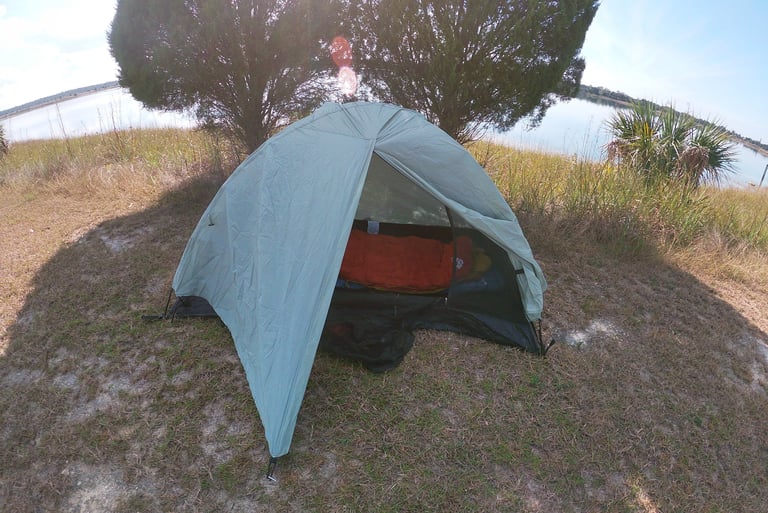
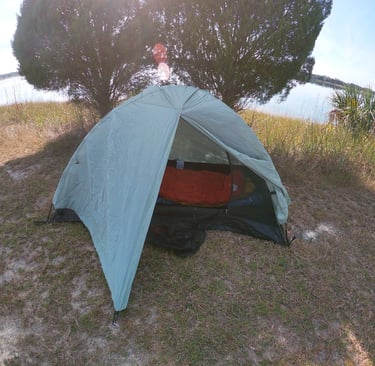
Here we have the Stansport 2 person tent. I bought it for 40 dollars in Oregon at a co-op called Bi Mart. Weighing in at 5.2 pounds, it's on the heavy and bulky side, but quite spacious. While I've always been a bit jealous of the 500 dollar ultra light tents, It's hard to justify the price when a budget tent does the trick and is usually more durable. I've already taken this tent stealth camping in Tacoma and on a two night trip in the Alaskan back country and it does the job just fine.
The Sleep System
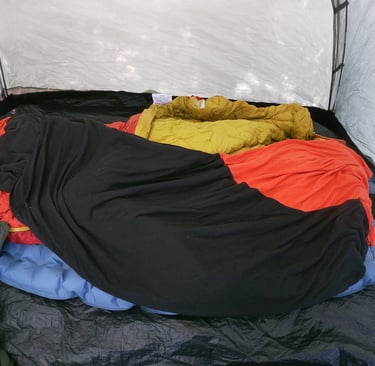
I consider the sleeping system to be an essential part of safety. Hypothermia is possible even on a summer day in the right conditions. Your sleeping bag is your warmest piece of gear. If you're feeling cold and hypothermic with no other options, stop and get in your sleeping bag. I always pack on the warmer side and an emergency blanket is a cheap and lightweight first aid essential. My upcoming trip may be sticking to Southern states, but I'm still ready for anything.

Sleeping Bag
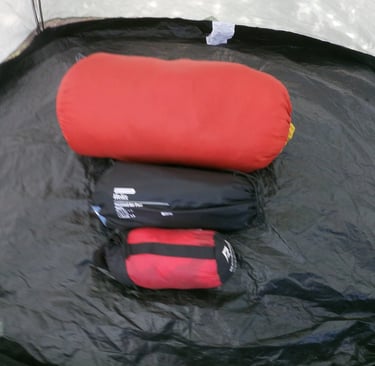
I got this Solstice 20 degree, synthetic sleeping bag in Maine at some outdoor store. I was hiking the Appalachian trail, and wanting for a warmer option through September. The weight, warmth, and pack size fit the bill for only 80 dollars. It ended up being overkill, but it should do nicely for this trip. I've enjoyed having a down sleeping bag with incredible weight to warmth ratio in the past, but I'm loathe to spend the extra money.
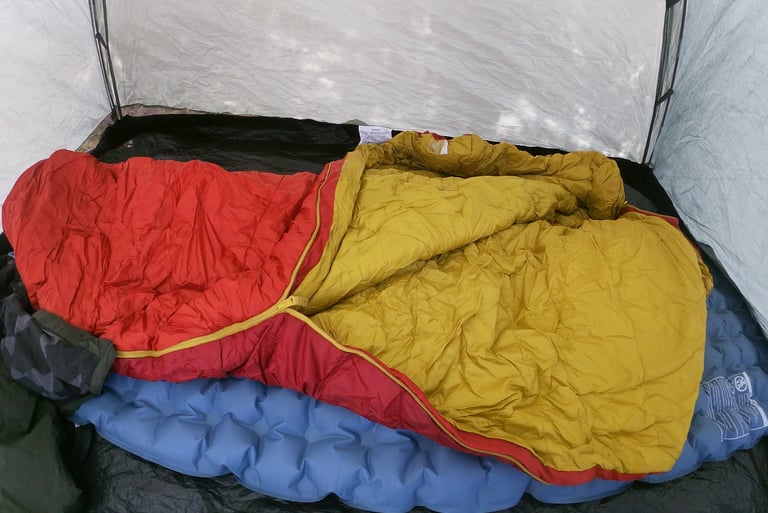
Sleeping Pad

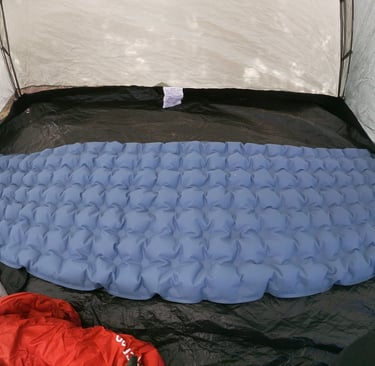
The REI Helix insulated sleeping pad has been my go-to for a few years now. I've never had it spring a leak once. However, after several months of use, the inner adhesive may start to break, causing a lump to form. Despite this, the 4.9 R value and comfort to weight ratio are big draws. In short, the R value is a measure of insulation for sleeping pads. Sleeping bag temperature ratings are tested with pads that have an R value of 5, so a lesser pad reduces the warmth of your bag. I always use blow up pads for additional warmth, comfort and to keep me out of moisture that accumulates on the bottom of the tent.
Sleeping Bag Liner
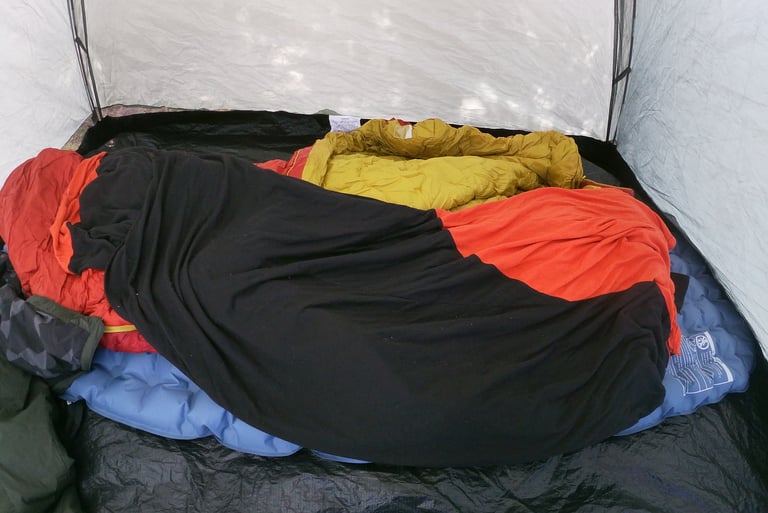
I've had this Sea to Summit fleece liner for several years now since I was camping out on the edge of Boulder. It's a great way to add 10 degrees to the sleeping bag while keeping it clean.
A Back Pack
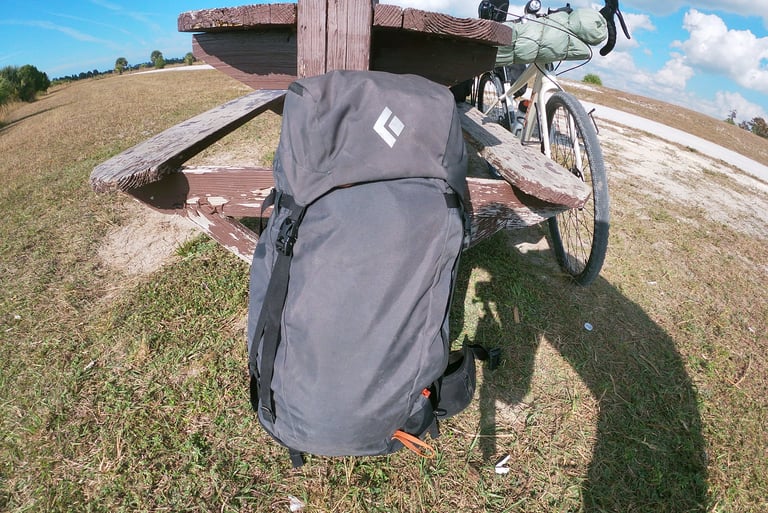
I got this 45L Black Diamond bag for day guiding on the Root Glacier in Alaska. It's been versatile and comfortable and was 40 percent off on a pro deal. While wearing a back pack isn't ideal, test rides with the pack haven't been a problem. The sleeping system fits nicely in a 20L dry bag with extra room for other gear and food.